EXHIBITIONS > Collage Art Exhibition
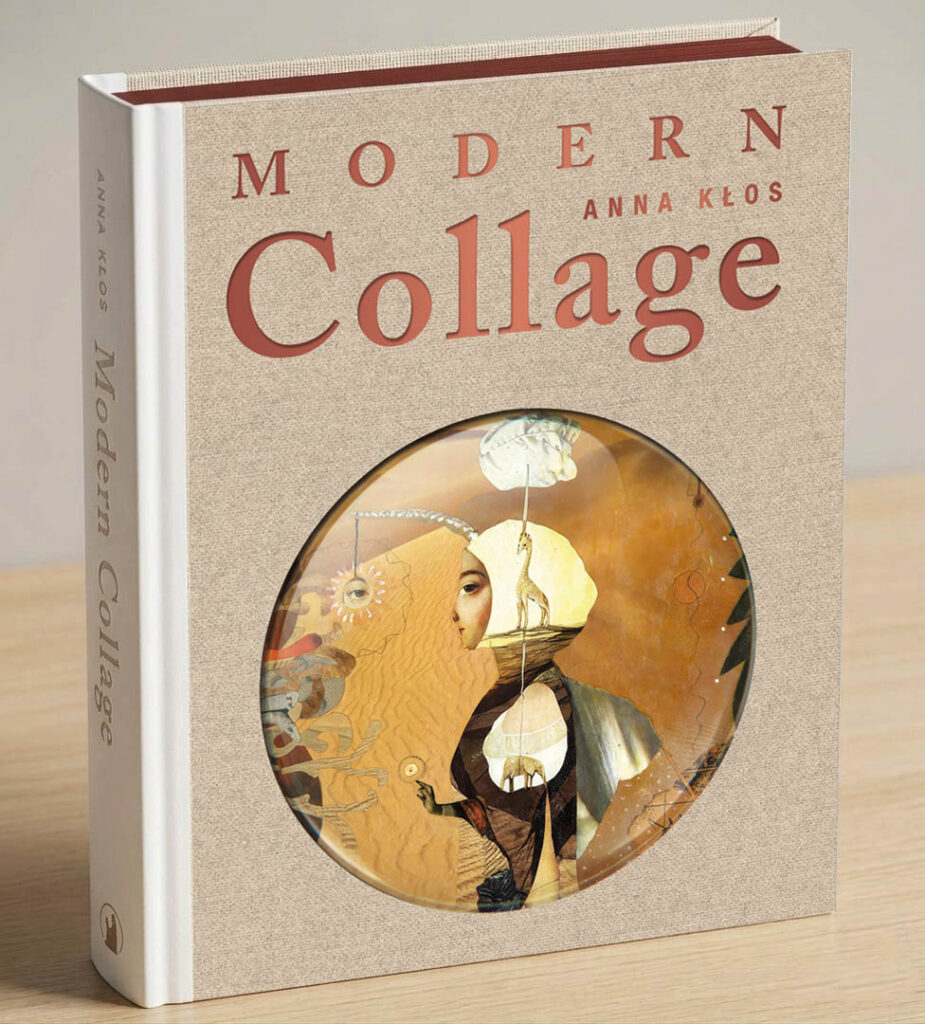
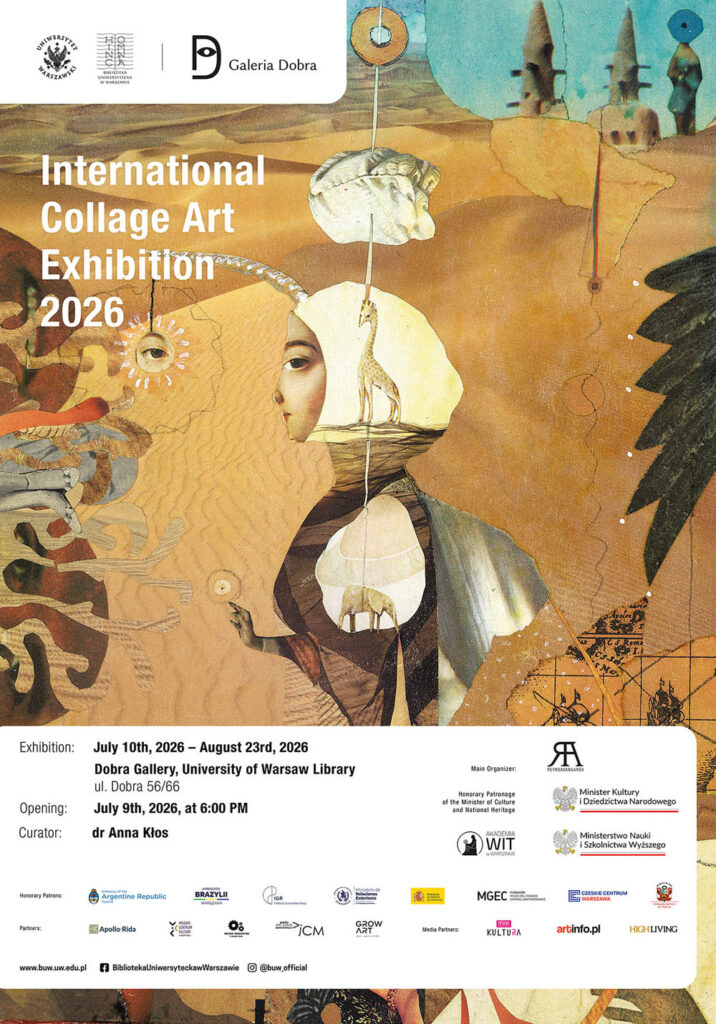
I am pleased to share that my collage works were featured in the International Collage Exhibition at Dobra Gallery, University of Warsaw Library, which opened on July 9th, 2026. The event was accompanied by the launch of the art book Modern Collage, a publication showcasing 46 artists from around the world, including David Carson, Marcos Mello, and Michał Batory.
The entire project was made possible through the dedicated work of curator Anna Kłos. It received prestigious honorary patronage from the Polish Ministry of Culture and National Heritage, alongside several embassies, and was supported by the WIT Academy and the Ministry of Higher Education.
THE COLLAGE ART OF OLIVER WEISS
The collage art of Oliver Weiss is rooted in a consistently developed analogue approach in which paper, scissors, glue, and paint remain the fundamental tools for constructing an image. Working between Berlin and New York, the artist consciously draws on the traditions of Berlin DADA and early twentieth-century Surrealism, regarding the technique of coller – “to glue together” – as a medium that remains strikingly relevant and capable of commenting on contemporary reality.
His collages are composed of realistic, figurative fragments; cut-outs from old photographs, postcards, illustrations, and printed matter. Yet through fragmentation, shifts in scale, and unexpected juxtapositions, their original literal meaning is disrupted. Elements that initially appear incompatible ultimately form compact, coherent compositions – often reminiscent of landscapes or theatrical stage designs. As a result, the works balance on the threshold between figuration and abstraction: recognizable motifs lose their unambiguous character, and the overall composition acquires a dimension that is more metaphorical than illustratively descriptive.
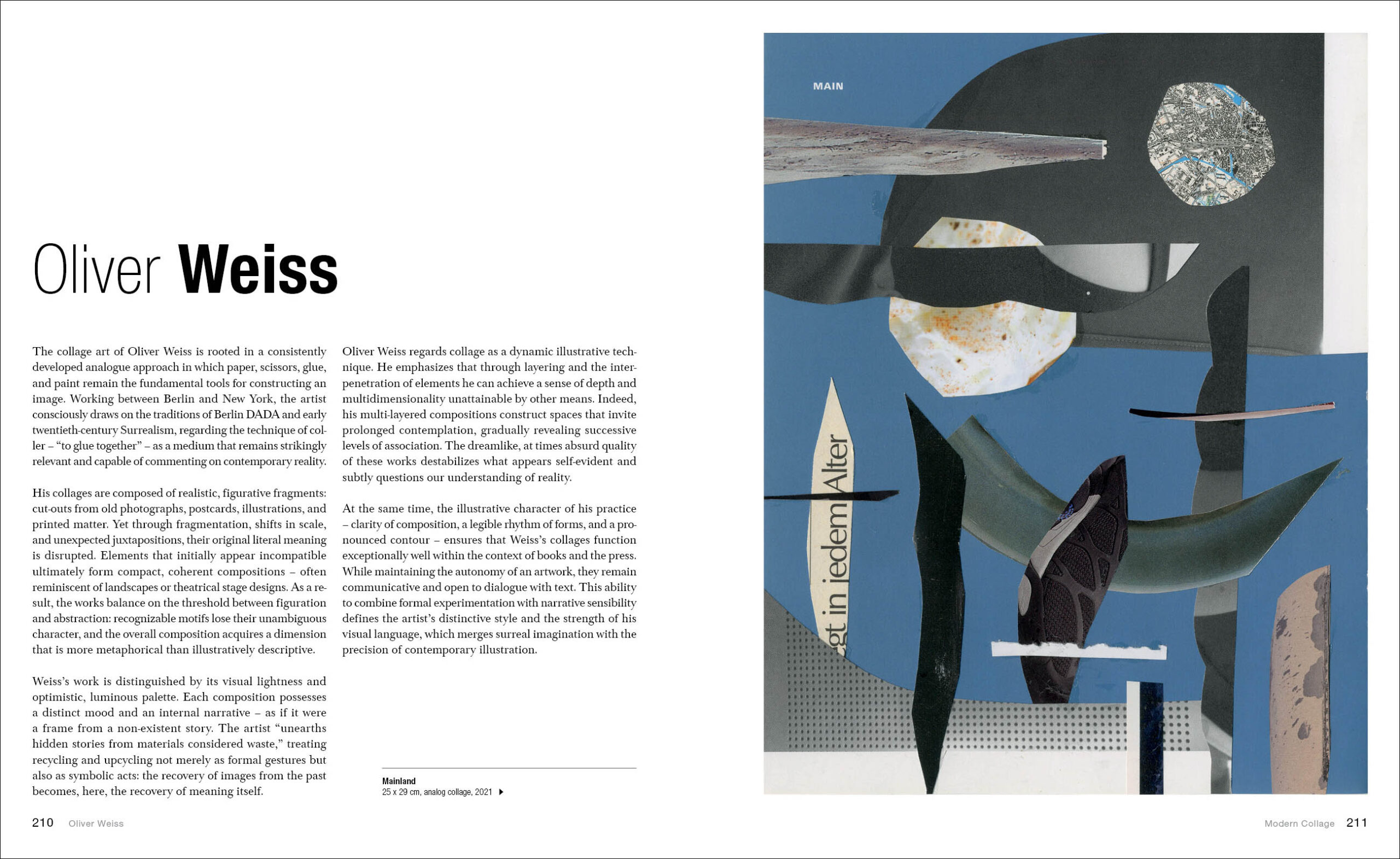
Weiss’s work is distinguished by its visual lightness and optimistic, luminous palette. Each composition possesses a distinct mood and an internal narrative – as if it were a frame from a non-existent story. The artist “unearths hidden stories from materials considered waste,” treating recycling and upcycling not merely as formal gestures but also as symbolic acts: the recovery of images from the past becomes, here, the recovery of meaning itself.
Oliver Weiss regards collage as a dynamic illustrative technique. He emphasizes that through layering and the interpenetration of elements he can achieve a sense of depth and multidimensionality unattainable by other means. Indeed, his multi-layered compositions construct spaces that invite prolonged contemplation, gradually revealing successive levels of association. The dreamlike, at times absurd quality of these works destabilizes what appears self-evident and subtly questions our understanding of reality.
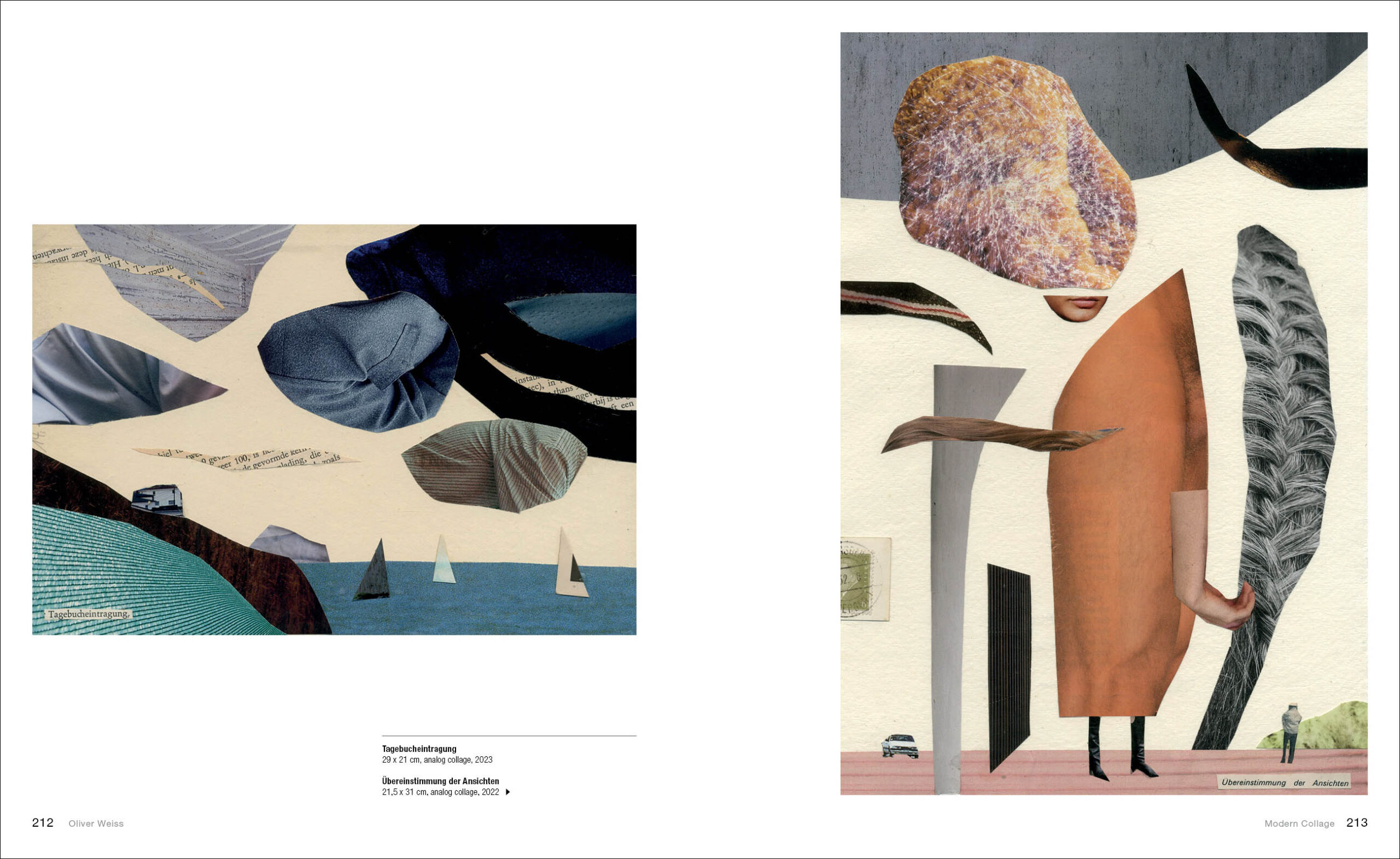
At the same time, the illustrative character of his practice – clarity of composition, a legible rhythm of forms, and a pronounced contour – ensures that Weiss’s collages function exceptionally well within the context of books and the press. While maintaining the autonomy of an artwork, they remain communicative and open to dialogue with text. This ability to combine formal experimentation with narrative sensibility defines the artist’s distinctive style and the strength of his visual language, which merges surreal imagination with the precision of contemporary illustration.
Anna Kłos